UAE E-Invoicing Implementation & Compliance Services
Prepare your business for UAE E-Invoicing with professional implementation, accounting, tax and compliance support.
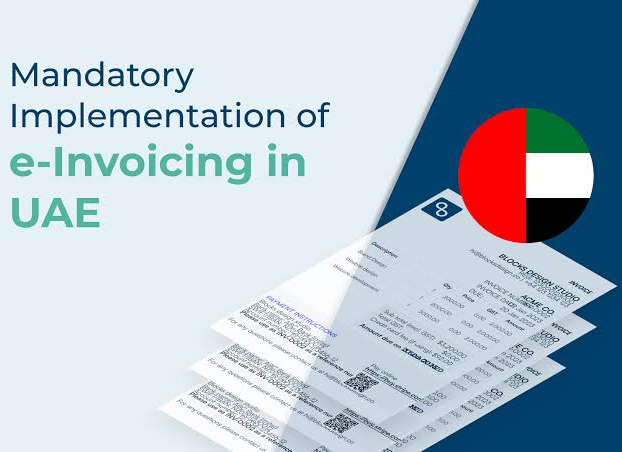
The UAE is moving towards a structured electronic invoicing (E-Invoicing) system to modernise invoicing, improve tax compliance and enable the electronic exchange of invoice data between businesses and the relevant systems.
Our UAE E-Invoicing services help businesses understand the requirements, assess their current invoicing and accounting systems, select an appropriate solution and implement E-Invoicing processes efficiently.
What is E-Invoicing in the UAE?
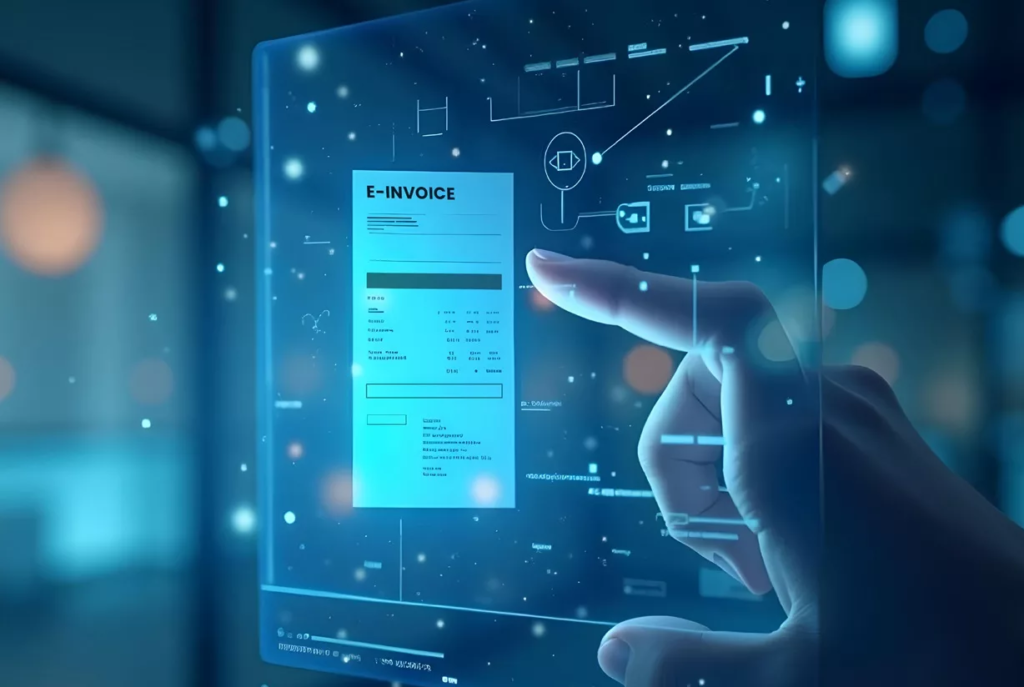
E-Invoicing is the electronic exchange of structured invoice data between a supplier and a customer through an approved electronic invoicing framework.
Unlike a traditional PDF invoice sent by email, an E-Invoice contains structured and machine-readable data that can be processed electronically by accounting systems and other connected platforms.
The UAE E-Invoicing framework is being introduced as part of the country’s digital transformation and tax administration initiatives.
Why Should Your Business Prepare for UAE E-Invoicing?
E-Invoicing can significantly change the way businesses create, issue, receive, process and store invoices.
Businesses should assess their current accounting and invoicing systems in advance to identify whether they are ready for the transition.
Key benefits of E-Invoicing include:
- Improved invoice accuracy
- Reduction in manual data entry
- Faster invoice processing
- Better accounting automation
- Improved record keeping
- Reduced risk of duplicate invoices
- Better visibility over sales and purchases
- Improved VAT compliance processes
- More efficient accounts receivable and accounts payable
- Easier integration between invoicing and accounting systems
UAE E-Invoicing Implementation Services
E-Invoicing can significantly change the way businesses create, issue, receive, process and store invoices.
Businesses should assess their current accounting and invoicing systems in advance to identify whether they are ready for the transition.
1. E-Invoicing Readiness Assessment
We review your existing invoicing and accounting processes to determine your level of readiness for UAE E-Invoicing.
Our Assessment Can Cover:
- Current invoicing process
- Sales invoice procedures
- Purchase invoice processing
- Accounting software
- ERP systems
- VAT accounting
- Customer and supplier master data
- Invoice data requirements
- Existing electronic systems
- Internal controls and approval procedures
2. E-Invoicing Gap Analysis
We identify gaps between your current invoicing process and the requirements of the UAE E-Invoicing framework.
Our Gap Analysis Helps Identify:
- System limitations
- Missing invoice information
- Data quality issues
- Accounting integration requirements
- Internal control requirements
- Potential implementation challenges
3. E-Invoicing Software & System Assessment
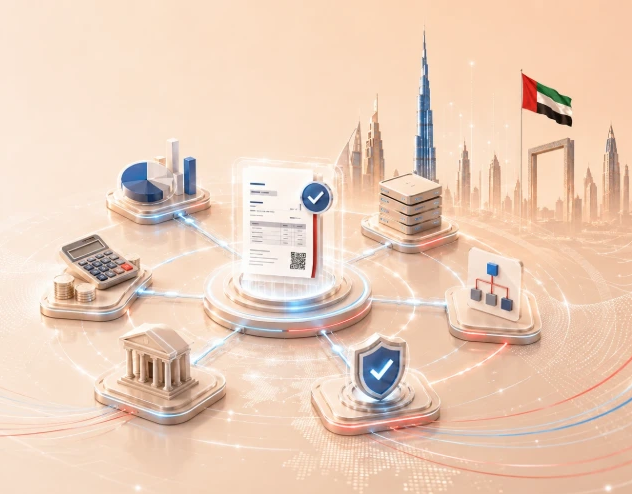
Your existing accounting or ERP system may require configuration or integration to support E-Invoicing.
We can assist you in assessing your current system and understanding the required changes.
This may include accounting platforms, ERP systems, invoicing software and other business applications.
4. E-Invoicing Implementation Support
Analytix Accounting & Bookkeeping will assist businesses in planning and implementing their E-Invoicing processes.
Our Implementation Support May Include:
- E-Invoicing process design
- Invoice workflow review
- Accounting system assessment
- Master data review
- VAT data review
- Invoice format review
- Integration coordination
- Testing support
- Process documentation
- Staff training
- Implementation assistance
5. E-Invoicing Compliance Support
Our team can provide ongoing accounting and tax support to help your business maintain appropriate E-Invoicing processes.
We can also review your invoicing procedures periodically and identify potential compliance issues.

E-Invoicing and VAT Compliance
E-Invoicing does not replace your existing VAT obligations.
Businesses will still need to maintain appropriate VAT accounting, tax invoices, records and supporting documentation in accordance with UAE VAT requirements.
A properly designed E-Invoicing process should therefore be integrated with your existing VAT accounting and bookkeeping system.
Our Team Can Help You Align:
E-Invoicing + VAT + Accounting + Bookkeeping + Corporate Tax
into an integrated financial reporting process.
Who Needs E-Invoicing in the UAE?
The UAE E-Invoicing framework is expected to affect businesses operating in the UAE that fall within its applicable scope.
Businesses should not wait until implementation deadlines approach before reviewing their systems.
We Recommend That Companies Start by Assessing:
- Whether they fall within the applicable E-Invoicing requirements
- Their current invoicing software
- Their accounting system
- Their ERP integration
- Customer and supplier data
- VAT invoice information
- Internal invoice approval processes
E-Invoicing for SMEs in the UAE
Small and medium-sized businesses may have additional challenges when implementing E-Invoicing because they may rely on basic accounting or invoicing software.
We help SMEs understand the requirements and identify practical solutions without unnecessarily complicating their accounting processes.
Our E-Invoicing services for SMEs can include readiness assessment, accounting system review, implementation support, staff training and ongoing compliance assistance.
E-Invoicing for Trading Companies
Trading businesses often process a large number of sales and purchase invoices.
An effective E-Invoicing system can help automate invoice processing and improve the connection between:
Purchase → Inventory → Sales → Invoice → Accounting → VAT Reporting
We can review your existing trading and accounting processes and help you prepare for E-Invoicing implementation.
E-Invoicing for Service Businesses
Professional service companies, consultants, contractors and other service providers can also benefit from structured electronic invoicing.
We can help review your existing quotation, billing, invoice and accounting workflows and identify the changes required for E-Invoicing.
Our UAE E-Invoicing Process
Step 1 – Understand Your Business
We review your business activities, invoicing volume, accounting system and existing processes.
Step 2 – Assess Your Readiness
We perform an E-Invoicing readiness assessment and identify potential gaps.
Step 3 – Develop an Implementation Plan
We help establish an appropriate implementation roadmap based on your business requirements.
Step 4 – Coordinate System Changes
Where required, we coordinate with your accounting software provider, ERP provider or technology partner.
Step 5 – Test the Process
We assist with testing invoice data, workflows and accounting integration before implementation.
Step 6 – Train Your Team
Your finance and accounting staff receive guidance on the new invoicing procedures.
Step 7 – Ongoing Support
We provide accounting, VAT and E-Invoicing support to help your business maintain compliant processes.
Why Choose Us for E-Invoicing Services?
As an accounting and tax advisory firm in the UAE, we understand that E-Invoicing is not only a technology project. It also affects accounting, VAT, internal controls and financial processes.
Our Approach Combines:
- Accounting expertise
- UAE VAT knowledge
- Corporate Tax knowledge
- Bookkeeping experience
- Financial reporting knowledge
- E-Invoicing implementation support
- Business process understanding
This allows us to help businesses implement E-Invoicing from both an accounting and compliance perspective.
Frequently Asked Questions About UAE E-Invoicing
- What is E-Invoicing in the UAE?
-
E-Invoicing is the electronic exchange of structured invoice information between businesses through the applicable electronic invoicing framework.
- Is a PDF invoice considered an E-Invoice?
-
A PDF invoice sent by email is generally different from a structured electronic invoice. E-Invoicing involves structured invoice data that can be electronically processed and exchanged through the relevant system.
- When will UAE E-Invoicing become mandatory?
-
The UAE is implementing E-Invoicing through a phased framework. Businesses should monitor the latest official requirements and applicable implementation dates rather than waiting until the deadline.
- Do small businesses need E-Invoicing?
-
The applicability of E-Invoicing depends on the applicable UAE rules and the business’s circumstances. SMEs should assess their requirements and prepare their accounting systems accordingly.
- Does E-Invoicing affect VAT?
-
E-Invoicing is closely connected with VAT invoicing and accounting processes. Businesses should ensure that their electronic invoicing system properly captures the information required for their VAT and accounting processes.
- Do I need to change my accounting software?
-
Not necessarily. The required changes depend on your existing accounting or ERP system and whether it can support the applicable E-Invoicing requirements and integrations.
- Can you help us implement E-Invoicing?
-
Yes. We can assist with E-Invoicing readiness assessment, gap analysis, accounting system review, implementation planning, process documentation, testing, staff training and ongoing accounting and tax support.
Get Ready for UAE E-Invoicing
Don’t wait until the implementation deadline to review your invoicing system.
Let our team assess your current accounting and invoicing processes and help you develop a practical UAE E-Invoicing implementation plan.
Contact us today for an E-Invoicing readiness assessment and implementation consultation.
Our E-Invoicing Services Include:
E-Invoicing Readiness Assessment | Gap Analysis | System Review | Implementation Support | VAT & Accounting Integration | Staff Training | Ongoing Compliance Support